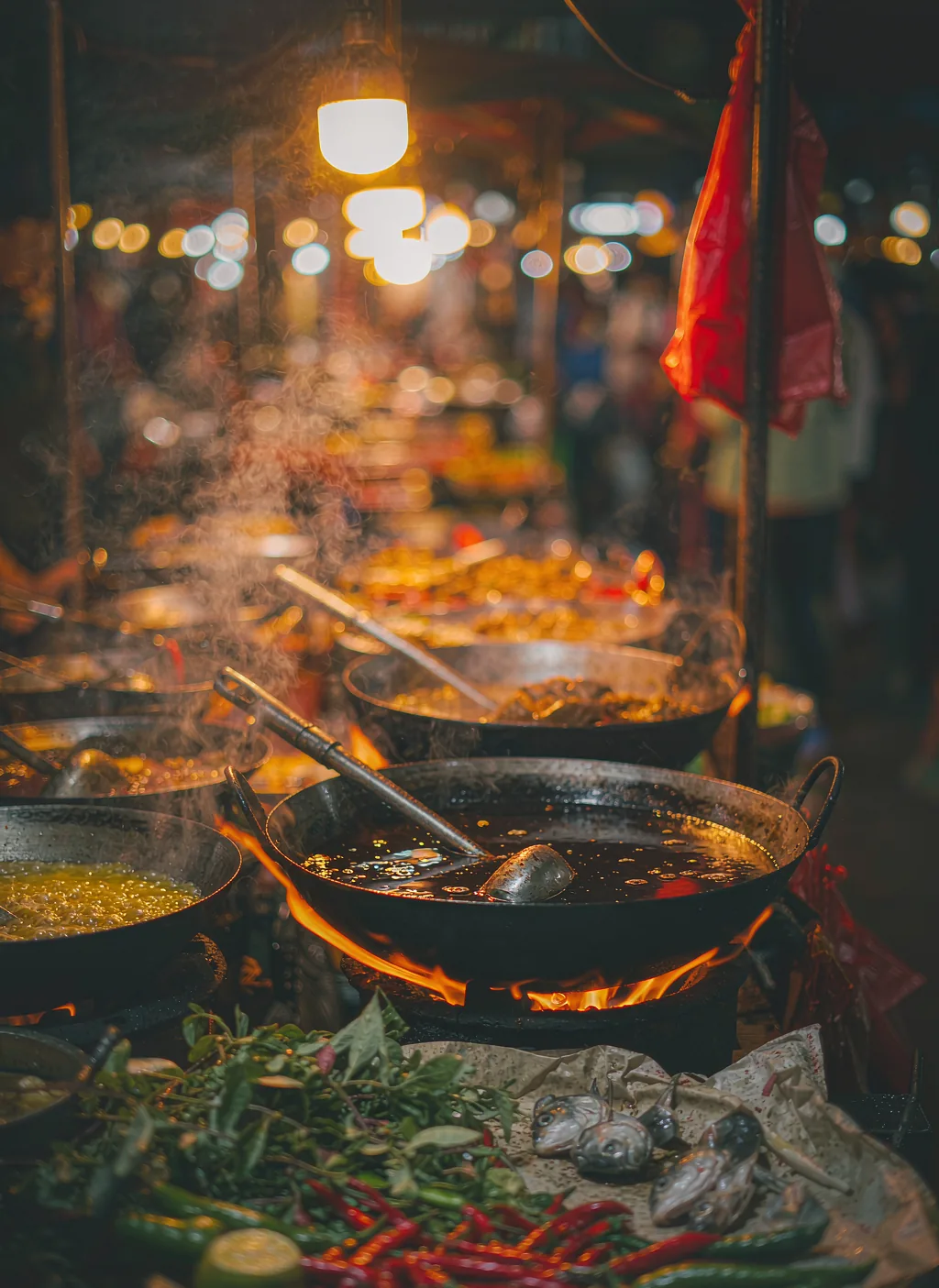
Thai food is four regional cuisines, not one. The north is sour and herbal (khao soi, sai ua), Isaan is fiery and fermented (som tam, larb), the centre is sweet-sour-balanced (green curry, pad thai), and the south is coconut-rich and very hot (gaeng som, massaman).
The short version
- North: khao soi, sai ua, nam prik ong — milder, sour, herbal.
- Isaan: som tam, larb, gai yang — the hottest food in the country.
- Central: green curry, pad thai, tom yum — the versions exported worldwide.
- South: gaeng som, massaman, crab curry — coconut and turmeric, very hot.
Central: Bangkok and the plains
Sweet, sour and rich: green curry, tom yum, pad thai, massaman. This is what most visitors think of as Thai food, and it is the most balanced of the regional styles.
Bangkok's Chinatown is the best single place to eat in the country.
North: Chiang Mai and beyond
Sticky rice instead of jasmine, less sugar, more bitterness. Khao soi (curry noodles), sai ua (herbed sausage) and nam prik relishes.
Khantoke dinners are the tourist version; the market stalls in the old city are the real thing.
South: the Andaman and the Gulf
Fiercely spicy and sour, with seafood and coconut. Gaeng som, massaman from the Muslim south, and crab everything.
If you ask for 'not spicy' in the south, taste it first — the baseline is higher than in Bangkok.
Vegetarian and halal
Vegetarian is easy in cities (ask for 'jay' — vegan Chinese style) and harder on small islands. Halal food is widely available in the south and in Muslim communities nationwide.
How to order without a phrasebook
Six phrases cover most of it. 'Mai phet' means not spicy — say it twice, and expect it to still be mildly hot. 'Phet nit noi' means a little spicy, which locals understand better. 'Sai khao' means with rice. 'Mai sai nam pla' means no fish sauce, which is the key request for vegetarians. 'Ao ma thao' means takeaway.
The most useful phrase is 'kin jay' or asking for 'ahaan jay' — vegan food, cooked without fish sauce, oyster sauce or shrimp paste, and marked with yellow flags at stalls during festival periods. Without that, a vegetarian will be served pad thai with fish sauce and told it is vegetarian.
For allergies, write it down in Thai and show the card. Peanut oil is common in the south, shrimp paste is in almost every curry paste, and 'no nuts' in English is understood inconsistently. The Thai phrase for a peanut allergy is 'phae thua', and it is worth having on your phone before you need it.