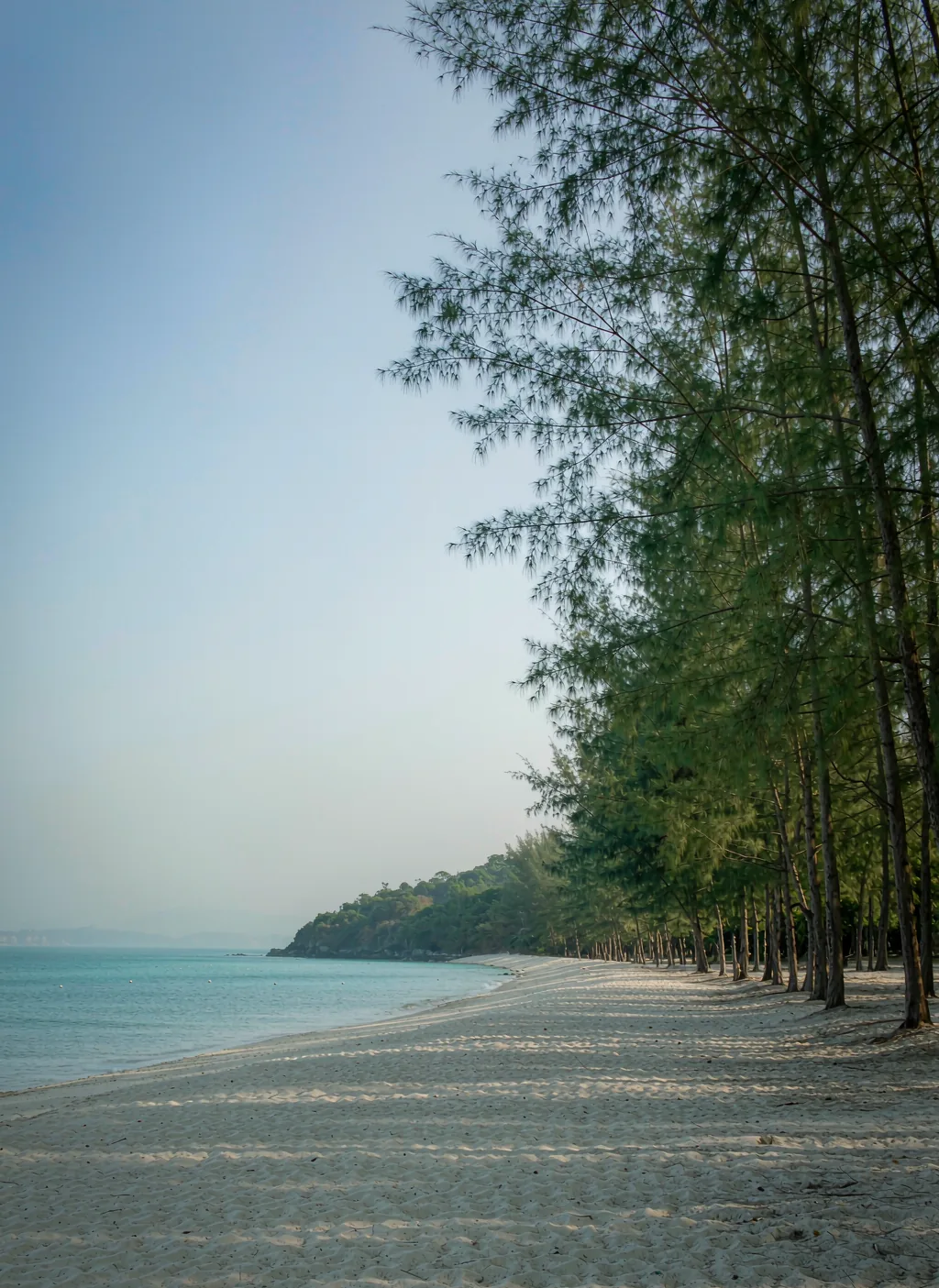
March is hot and dry, still workable on the Andaman but increasingly hazy in the north because of the burning season. Expect 33–36°C by day and air quality that can be genuinely unhealthy in Chiang Mai.
The short version
- The Andaman is still good, with warm water and clear skies.
- The north's burning season peaks — Chiang Mai's air can be among the worst in the world.
- Heat builds through the month; sightsee before 10am and after 4pm.
- Prices are 20–30% below high season on the coast.
Weather
Hot and dry almost everywhere: 30–35°C in Bangkok, the Andaman calm and clear, the Gulf still pleasant. Rain is rare until the very end of the month.
The burning season
March and April are when agricultural burning peaks in northern Thailand. Chiang Mai and Chiang Rai can see hazardous air quality for days. If you have respiratory issues, go south instead.
Why we still like it
Diving is at its best — manta rays at Koh Bon, good visibility in the Similans — and hotel rates are 20–30% below January. Book the Andaman rather than the north.
Where to go in March
March is a coast month. The Andaman is still dry, the sea is calm and the water is at its warmest, which makes it one of the better months for snorkelling and diving even though the air temperature is punishing by 11am. Krabi, Phuket and Koh Lanta all work.
The Gulf is starting to build and the east coast of the peninsula catches rain earlier than the west. We would not book Koh Samui in March if a beach is the priority; it is fine for a resort stay with a pool.
The north is out. Chiang Mai's air quality in March is among the worst of any city in the world on bad days, the mountains disappear behind smoke, and the burning season runs through April. If the north is the point of your trip, move it to November or December rather than trying to work around it.